Weekly Update
Pilates: Does It Really Have to Be One Way?
There seems to be quite a debate around Pilates on social media at the moment, and if I’m honest, I’m finding it a little frustrating.
There is so much discussion about what is and isn’t Pilates, which method is right, and whether certain exercises or equipment should be considered part of the practice.
So, I thought I’d share my thoughts.
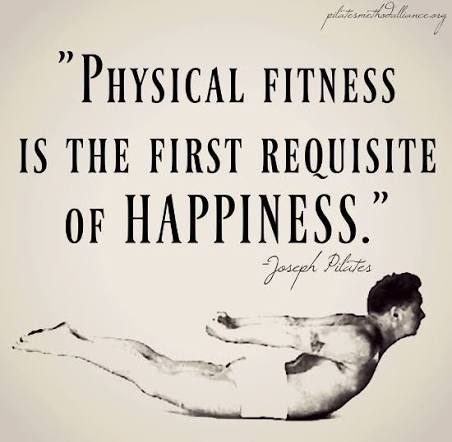
Joseph Pilates developed a method of movement and exercise that has stood the test of time. His original repertoire of 34 mat exercises, traditionally taught in a specific sequence, is still practised today and forms the foundation of what many people know as Classical Pilates.
Over time, the method has evolved. Contemporary Pilates has taken those original exercises and principles and developed, adapted and modified them, bringing in a greater understanding of movement, biomechanics and individual needs.
We’ve also embraced different equipment and props, from the magic circle and resistance bands to soft balls, balance discs and much more. These can all bring something different to a class, whether that’s added resistance, balance, stability or simply a different way of exploring movement.
It’s also worth remembering that Joseph Pilates originally developed his equipment-based work using bed frames and springs, which eventually led to the Reformer. Mat work was developed as another way to practise his method, rather than being the starting point for everything.
Personally, I teach a mixture of Classical Pilates, Contemporary Pilates and Sculpt, with a little fitness thrown in. I enjoy bringing different elements together and making classes varied, interesting and accessible.
I don’t believe there is one right or wrong way to approach Pilates.
What matters to me is that the foundations of the method are understood and respected.
For me, those foundations are the six core principles:
- Breath – understanding how we breathe and how it supports movement.
- Concentration – being present and focused on what we’re doing.
- Centering – working from our centre and building awareness of our core.
- Control – moving with intention rather than simply going through the motions.
- Precision – paying attention to how we move.
- Flow – allowing movement to feel connected and fluid.
These principles can be applied whether you’re following the original mat sequence, working on a Reformer, using small equipment or incorporating more contemporary movement.
I also believe good teaching is about recognising that everybody is different. What works for one person might not work for another, and that’s absolutely fine.
Being able to adapt, offer options and meet people where they are is part of being a good instructor.
We don’t all have to teach the same way, and we certainly don’t all have to agree on everything.
I think we should respect where Pilates came from, appreciate how it has developed and allow instructors the freedom to bring their own knowledge, experience and personality into their teaching.
After all, movement should be something we enjoy, something that supports us and something we can continue to develop throughout our lives.
Pilates doesn’t need to be a competition about who is doing it right. There’s room for different approaches, different styles and different ways of moving.
Sam ‘mixing it up’ Hobbs