Weekly Update
How footwear shapes your hips and what you need to know before following the barefoot trend
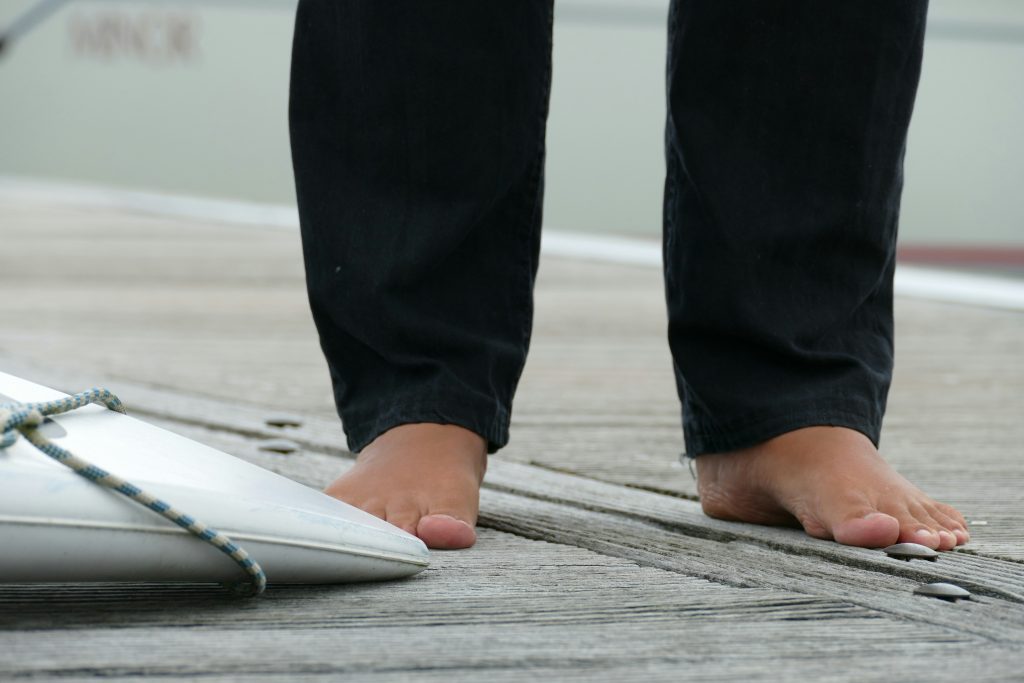
When we think about hip health, most people jump straight to stretches, tight muscles, or getting older.
Very few think about their shoes – yet what’s on your feet has a direct influence on how your hips move, load and feel every single day.
Every step you take sends force up through the feet, into the knees and straight into the hips.
If something alters that pathway – even subtly – your hips will compensate.
Over time, those tiny changes add up.
How shoes influence hip mechanics
Cushioning & Support
Highly cushioned trainers feel lovely underfoot, but they can encourage heavy heel-striking.
When the heel hits the ground first with more force:
- the stride length changes,
- the pelvis tilts differently,
- and the hips absorb more impact than they need to.
On the flip side, very structured shoes can limit the natural movement of the foot, which again shifts extra work upward into the hips.
Heel Height
Even everyday trainers often have a small heel lift.
That tiny wedge underneath you can:
- tighten the hip flexors,
- shorten your stride,
- subtly tip the pelvis forward,
- and change how the glutes fire.
Higher heels magnify this effect – no surprise there!
Toe Space & Fit
If your toes can’t spread comfortably, your feet can’t stabilise properly.
When the foundations are unstable, the hips have to step in to help… and they’re not really built for that job.
Small misalignments at the bottom of the chain often become irritation or stiffness higher up.
The barefoot shoe trend
Barefoot shoes and minimal footwear are everywhere right now.
And while the idea behind them makes sense – letting your foot move naturally, strengthening the foot muscles and restoring balance – they’re not a magic fix.
And they are definitely not right for everyone.
Here’s what’s important to understand:
Barefoot shoes shift the workload dramatically.
Your feet, calves and hips suddenly have to absorb and manage force they haven’t had to deal with in years – sometimes decades.
If you transition too quickly, you may end up with:
- calf tightness,
- plantar fascia irritation,
- hip discomfort,
- or general lower-body fatigue.
The concept isn’t the issue – the speed of the transition is.
Some people thrive in barefoot shoes.
Some thrive in supportive shoes.
Most people do best with a gradual approach and variety in their footwear.
As always, there’s no one-size-fits-all answer.
It’s about finding what works for your body, your activity level and your hip structure.
So what does this mean for your hips?
Your hips love:
- natural, comfortable movement
- shoes that allow your feet to function well
- strength and stability in the whole body
- gradual changes, not sudden shifts
- awareness over fashion trends
Good hip care isn’t about obsessing over the perfect shoe.
It’s about choosing footwear that supports how you move – and making sure the rest of your body is strong enough to handle the loads of daily life.
Want to understand your hips even better?
If you’ve ever wondered:
- why your hips feel tighter as you get older,
- what role hormones and genetics play,
- how to build strength without pain,
- or how everyday habits (like footwear) affect hip comfort…
…then the Hip Care Blueprint Workshop is made for you.
We’ll explore everything from mobility and stability to strength and real-life movement habits – all in a simple, accessible way.
You’ll learn exactly what your hips need, how to support them long-term, and how small changes can make a huge difference.
It’s practical, grounded, and rooted in the philosophy I live by.
There’s always an option, and your body deserves kindness and
clarity – not confusion.
The Hip Care workshop:
Saturday 7th February, 9.30-11.30am
What’s App to book your space
Sam ‘hippy’ Hobbs